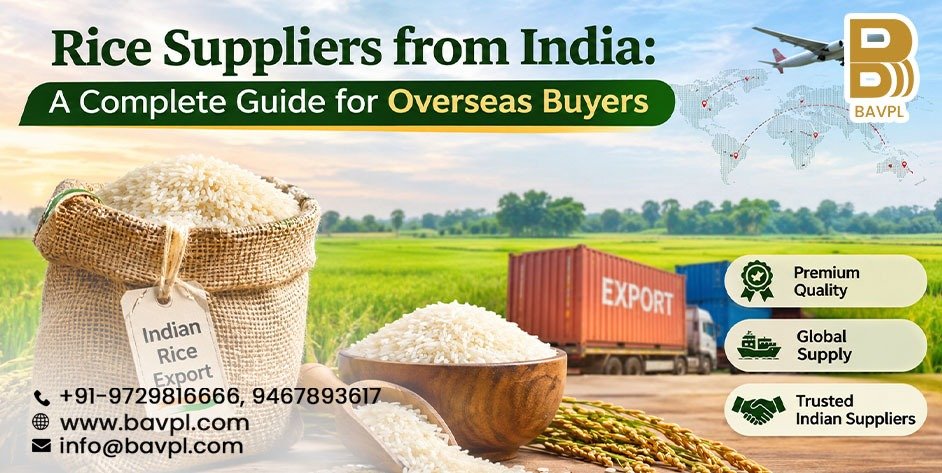
There are high stakes associated with sourcing bulk rice from across international borders. An inconsistent shipment of grain in length, excessive amount of moisture or missing phytosanitary papers can cause delays to customs clearance and impact on retail shelf trust.
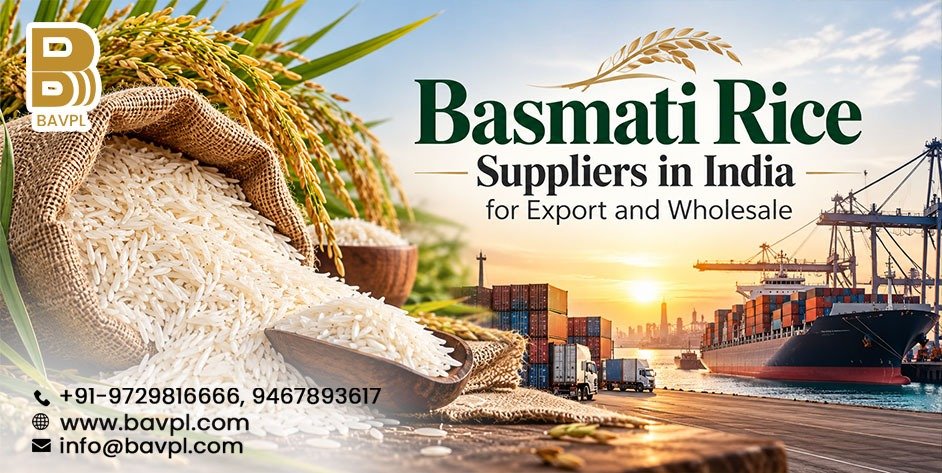
Supermarkets, food distributors and hospitality buyers who deal directly with established Rice Suppliers from India benefit from assured supply of the finest varieties of rice available in the world, both Basmati and non-Basmati.
This blog breaks down how India's rice supply chain works, which varieties lead global demand, and how overseas buyers can lock in smooth, repeatable imports.
India's Position in the Global Rice Trade
India is the undisputed powerhouse of international rice supply, accounting for nearly 40% of global rice exports and shipping to over 150 countries across the Middle East, Europe, North America, CIS nations and Africa.
More than 70 % of the genuine Basmati rice comes from the Geographical Indication (GI) tagged Indo-Gangetic belt, especially from the rice milling centres Karnal and Taraori of Haryana. Cleaning, grading, and packing thousands of metric tons without foreign material is possible for Indian mills using modernized processing clusters with Buhler whitening lines and optical sorters driven by AI.
Popular Indian Rice Varieties Overseas Buyers Source!
The different grain profiles needed for different regional cuisines, and retail segments:
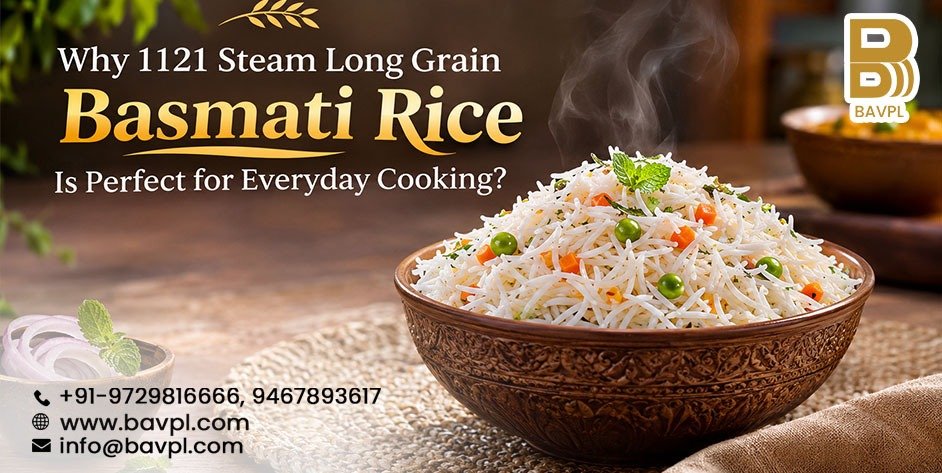
- 1121 Basmati (Steam, Creamy Sella & Golden Sella): Exceptional post-cook elongation, and long raw grain length (8.30+ mm) makes it best choice for biryanis, and gourmet foodservice.
- 1509 & 1401 Basmati: Early-harvest, cost-effective long-grain Basmati varieties offering strong aroma and fluffy texture for everyday retail packs.
- Pusa & Traditional Basmati: Prized for rich, natural fragrance, and delicate slender grains favored across the Middle Eastern, and European households.
- Non-Basmati Varieties (IR64, PR-14, Sona Masoori & Broken Rice): High-volume parboiled and steam grades serving everyday household consumption, institutional catering, and food processing worldwide.
How the Farm-to-Port Milling Process Protects Quality?
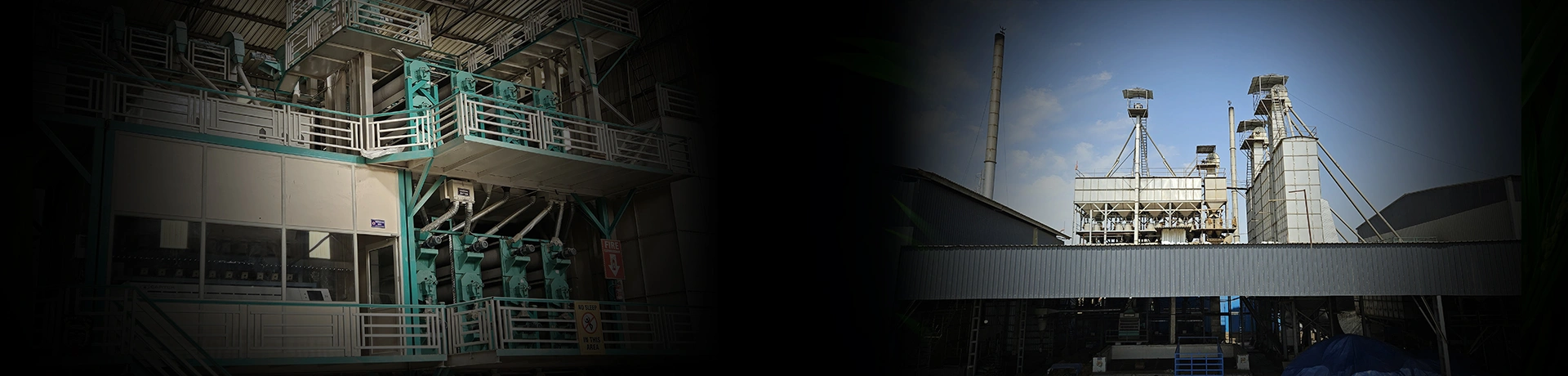
One of the best ways to assess Rice Suppliers from India is to see what happens inside their own processing plant, as this will demonstrate whether they are offering you true batch consistency:
- Direct Paddy Procurement & Moisture Drying: Certified paddy is directly procured from the trusted farming belts and moisture is removed under controlled temperatures which prevents kernel cracking.
- Pre-Cleaning & Hydrothermal Parboiling: High capacity cleaners remove dust, stones and husk before nutrients and firmness are locked into the grain by steam or parboiling.
- Precision Whitening & AI Sortex Grading: 100% sortex-cleaned uniformity with a combination of gentle milling, and optical color sorters removing chalky, discolored, or broken kernels.
- Tamper Proof Export Packaging: Grains are packaged in moisture barrier BOPP bags, PP woven sacks, non-woven bags or private label retail bags, depending on import countries requirements for labelling.
Conclusion
Partnering with the transparent, vertically integrated Rice Suppliers from India turns international grain procurement into predictable, scalable advantage for your business.
Operating from the heart of India's Basmati belt in Karnal, Haryana, Badri Agro Ventures combines over three decades of industry expertise with a 120 MT/day milling capacity, Bühler whitening technology and AI-based optical sorting. Certified under ISO 22000, FSSAI, and APEDA, the company supplies 1121 Basmati, 1509, Pusa, and non-Basmati varieties—alongside flexible OEM private-label packaging—to importers across the UAE, Saudi Arabia, Oman, Europe, Russia, and beyond.
FAQs
What is the typical minimum order quantity, when importing rice from India?
Most Indian rice exporters set an MOQ of one 20-foot container, which holds approximately 24 to 25 metric tons.
Which Indian ports handle most bulk rice exports?
Mundra Port and Nhava Sheva (JNPT) on India's western coast handle the majority of containerized Basmati, and non-Basmati shipments.
Can overseas buyers launch their own private-label rice brand with an Indian supplier?
Yes, established export mills provide complete OEM private labeling, printing custom brand artwork and local nutritional panels on bags from 1 kg to 50 kg.
What is the difference between Steam, White Sella and Golden Sella Basmati rice?
Steam Basmati is steamed before milling for a soft white grain; White Sella is parboiled for firmer, non-sticky cooking; Golden Sella undergoes longer parboiling that gives the grain a rich golden hue.
How long does ocean transit take from India to major export markets?
Transit takes roughly 4 to 7 days to GCC ports, 18 to 25 days to European ports and 28 to 35 days to North American ports.